Reflections from the JBI gLOCAL Solution Room on Cervical Cancer Cervical cancer remains one of the most preventable yet devastating cancers affecting women worldwide. Despite significant advances in screening, vaccination, and treatment, thousands of women continue...

Stakeholder Roundtable for the Launch of Policy Brief and Technical Report on Enhanced Rock Weathering in India
Home »
Stakeholder Roundtable for the Launch of Policy Brief and Technical Report on Enhanced Rock Weathering in India
Comments
Written by

On 9 April 2026, policymakers, researchers, industry leaders, and practitioners convened at the India Habitat Centre, New Delhi, for a closed-door Stakeholder Roundtable on Enhanced Rock Weathering (ERW)—marking the official launch of a Policy Brief and Technical Report on ERW in India.
Organised by MANT in collaboration with CRIA, and supported by Energiva Ventures, the roundtable was designed not as a ceremonial release—but as a working dialogue. A space to question, align, and move forward.
Why Enhanced Rock Weathering, and Why Now?
India stands at a unique intersection.
With vast basalt reserves, an extensive agricultural landscape, and soils increasingly facing nutrient depletion and acidification, Enhanced Rock Weathering presents a rare opportunity—one that bridges climate mitigation with agricultural resilience.
At its core, ERW involves the application of finely crushed silicate rocks to farmland. The benefits are twofold:
- Carbon dioxide removal from the atmosphere
- Improved soil health, nutrient availability, and crop productivity
For smallholder farmers, this is not just a climate solution—it’s a livelihood intervention.
To understand the science, potential, and relevance of ERW in greater detail, explore our ERW Overview Page.
Setting the Stage: From Evidence to Dialogue
The roundtable began with a welcome and context-setting address, followed by opening remarks that framed the urgency of advancing carbon removal pathways in India.
A keynote by Dr. Neelima Alam (Department of Science and Technology) offered a broader perspective on India’s evolving climate and policy landscape—highlighting both opportunity and responsibility.
This was followed by the formal launch of:
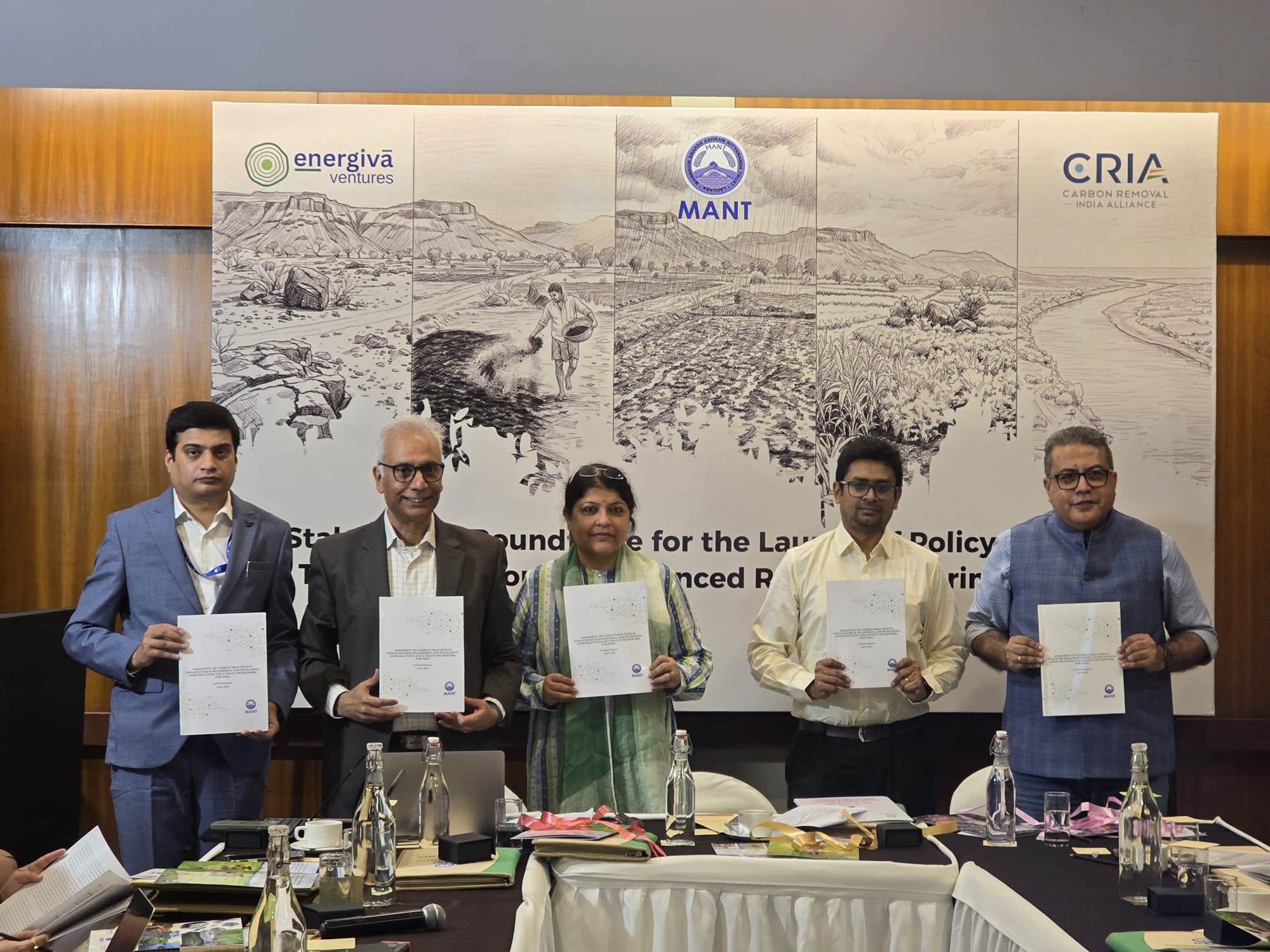
A presentation of key findings laid the groundwork for what became the most critical part of the day; the roundtable discussion.
What the Discussions Revealed
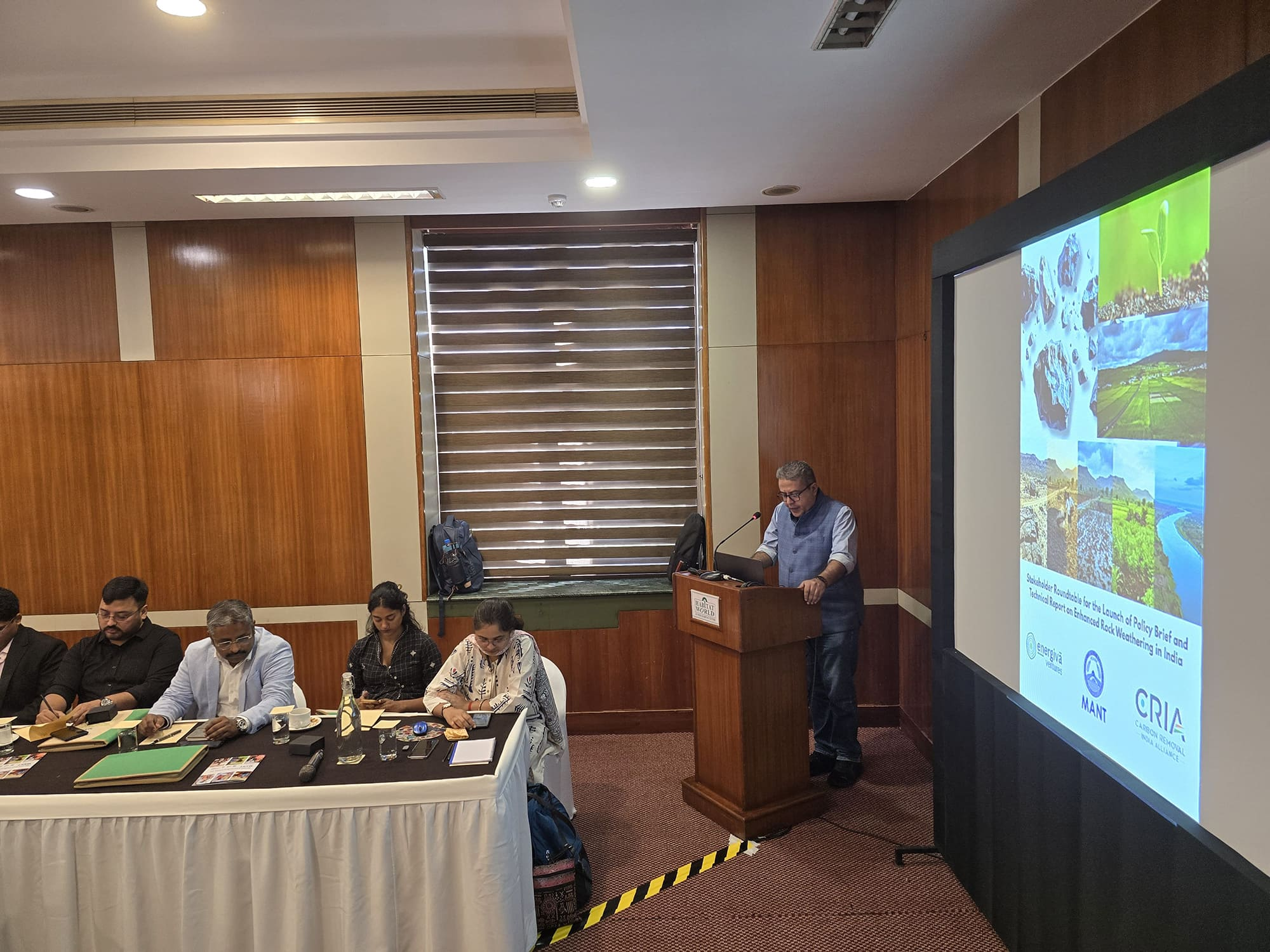
Rather than seeking quick consensus, the roundtable surfaced what truly matters—the gaps.
Three themes stood out clearly:
1. Policy Vacuum
Despite growing global momentum around carbon dioxide removal (CDR), ERW and broader CDR approaches remain largely absent from India’s policy frameworks.
- No dedicated national strategy
- Limited regulatory clarity
- Fragmented institutional ownership
2. MRV and Standards Gap
The absence of a national Measurement, Reporting, and Verification (MRV) framework remains a major bottleneck.
As a result:
- Projects rely heavily on international registries
- Credibility and scalability remain constrained
- Domestic alignment is delayed
3. Market and Financing Challenges
While international voluntary carbon markets are opening doors, access remains uneven.
Key challenges include:
- Lack of domestic demand signals
- Uncertainty in carbon pricing
- Limited financing pathways for early-stage deployment
A Shift in Approach: From Debate to Direction
What made this roundtable different was its intent.
Not to validate what is already known.
But to confront what is missing.
Participants across policy, academia, industry, and finance engaged in candid discussions on:
- The strength—and limits—of current scientific evidence
- The need for an enabling policy architecture
- The realities of implementing ERW in India’s smallholder farming systems
The outcome wasn’t a neat set of conclusions.
It was something more valuable: clarity.


What Comes Next
India’s potential to contribute meaningfully to global carbon removal is real. But potential does not translate into impact without systems.
The roundtable helped crystallise what must come next:
- Policy recognition of ERW and CDR pathways
- Development of national MRV standards
- Stronger cross-ministerial coordination
- Financial mechanisms that support early adoption
- Context-specific models for smallholder integration
Moving Forward, Together
If climate solutions are to be credible, they must be:
- Scientifically sound
- Economically viable
- Socially grounded
“
Enhanced Rock Weathering sits at this intersection.
This roundtable was not the end of a process—it was a step toward building a coordinated, evidence-informed pathway for ERW in India.
The conversations have begun.
The work now is to carry them forward.
Related Articles
Advancing the Fight Against Cervical Cancer Through Evidence and Collaboration
Evidence into Community Action: Advancing Innovation in Community-Oriented Primary Care Through Global Collaboration
Reflections from the JBI gLOCAL 2026 Solution Room Healthcare systems around the world are increasingly recognising that sustainable improvements in population health begin within communities. On 14 May 2026, researchers, healthcare professionals, policymakers,...
Turning Evidence into Action: Global Experts Unite to Address Obesity Through Evidence-Based Care
Obesity: Evidence-Based Care on Prevention and Management – A gLOCAL Solution Room On 2 June 2026, healthcare professionals, researchers, policymakers, educators, and community advocates from across the globe came together virtually for the gLOCAL Solution Room titled...
Stay Up to Date With The Latest News & Updates
Join Our Newsletter
Sed ut perspiciatis unde omnis iste natus error sit voluptatem accusantium doloremque
Follow Us
Sed ut perspiciatis unde omnis iste natus error sit voluptatem accusantium doloremque


